
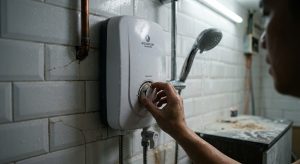



The morning shower is a solitary, naked reckoning. We stand shivering on the damp tiles, turning a plastic dial and expecting immediate salvation from the plumbing. We demand a heavy, scalding downpour to wake us up, but the machinery hidden on the wall is much more temperamental than we care to admit.
We expect miracles from a small plastic box, but the reality involves a violent clash between cold water and raw electrical current. If you are stripping out an old bathroom and looking for an instant water heater singapore unit to replace a failing one, you have to face the hard facts of electrical resistance. You cannot simply bully the plumbing into giving you everything you want. You have to understand how the heat is actually made.
The Illusion Of The Rain Head
The most common, infuriating mistake people make during a renovation is buying a massive, dinner-plate-sized rain showerhead. They bolt this giant steel disc to the wall, hook it up to a standard instant heater, and expect a tropical monsoon.
The result is always a miserable, tepid drizzle. An instant unit does not pull from a pre-boiled tank. It has to boil the water in the exact fraction of a second the liquid rushes past a copper element. A giant rain head demands a massive volume of water. The water moves far too quickly over the element to absorb any real heat. You ruin the shower by asking for too much flow.
Controlling The Speed Of Heat
You cannot cheat the physics of flow restriction. The only way an instant unit can safely heat the incoming water is by physically slowing it down. This is the brutal, non-obvious trade-off of the modern washroom.
This is especially true during the rainy season, when the incoming groundwater is significantly cooler and the copper element is forced to work much harder to bridge the thermal gap. Most people assume turning the heat dial to maximum is the only way to get a hotter shower. The real answer is that you must turn the main water inlet valve down by a quarter turn. By reducing the physical volume of water entering the chamber, you give the copper coil the crucial seconds it needs to boil the liquid. You trade a wide, heavy downpour for a narrow, intensely hot stream.
The Danger Inside The Walls
There is a terrifying casualness to how some people treat bathroom electricity. They buy the most powerful, high-wattage heating unit on the shelf and instruct a builder to simply wire it into the old cables left behind by the previous machine.
Older housing stock was frequently wired with thin, 2.5-millimetre cables designed for gentler appliances. A modern unit draws a massive, violent surge of current the moment you open the tap. If the existing copper wire is too thin to carry that heavy electrical load, the resistance causes the cable to literally melt behind your tiles. You must rip the wall open and pull an entirely new, thick cable straight from the main breaker box.
The Ritual Of The Heating Element
We treat these appliances as if they are indestructible. But the copper heating element sits in constant, punishing contact with raw tap water. Over the years, microscopic minerals in the water bake onto the metal, creating a thick crust of limescale.
This crust acts like a winter coat, trapping the heat inside the copper and preventing it from reaching the water. The element eventually overheats and snaps with a sharp crack. To prevent this sudden death, you must flush the pipes whenever the machine has sat unused for a week. Turn the electrical isolator off, run the cold water continuously for two minutes to clear any settled sediment, and only then flip the power back on.
Measuring Your Domestic Pressure
You must look past the glossy chrome finishes in the showroom and focus entirely on the gritty infrastructure of your own home.
- Measure the standing water pressure of your house before buying anything.
- If your pressure sits below 1.5 bar, an instant heater will completely refuse to work.
- These units contain a safety switch that requires a minimum physical force of water to trigger the heating element.
We strip away our defences every morning when we step into the bathroom. We rely entirely on unseen wires and plastic valves to grant us a brief moment of comfort. When you stop chasing the illusion of a luxury spa and start respecting the harsh, physical limitations of domestic plumbing, you finally secure the reliable warmth you need to face the harshness of the day.