




Buying in the Chicago suburbs is not simply a matter of finding the most appealing kitchen or the largest backyard. A home can look excellent in photos yet create a routine that feels expensive, inconvenient, or limiting once workdays, winter weather, errands, transit schedules, and household changes enter the picture. The most useful comparisons begin with how each community supports everyday life.
For buyers narrowing their search in the northwest suburbs, Arlington Heights Homes for Sale from GetBurbed provides a way to review active homes and condos alongside neighborhood amenities, school district information, transportation considerations, and property features. GetBurbed serves Arlington Heights and nearby northwest suburban communities, and its team is led by local real estate professional Holly Connors, whose construction knowledge and long-term experience in the area can help buyers evaluate how a home functions beyond its listing photos.
Start With Your Daily Routine
Before comparing suburbs, write down the three factors that will most affect your week. These might include a manageable commute, access to a train station, room for a home office, nearby childcare, a quieter street, or the ability to walk to parks and errands. A smaller home near a convenient transit connection may fit one household better than a larger property that adds substantial travel time each day.
Visit each area with a practical lens. Drive the route to work, stop at a grocery store, look at parking, and spend time near the home at different hours. A community should work on an ordinary Tuesday, not only during a relaxed weekend showing.
Set a Realistic Monthly Housing Budget
The purchase price is only one part of ownership. Build a monthly estimate for every home or suburb under consideration that includes the mortgage payment, property taxes, homeowners’ insurance, utilities, association dues where applicable, routine maintenance, and commuting costs. Two homes with similar asking prices can create very different monthly obligations.
Costs to Compare for Each Property
- Principal and interest are based on your expected financing.
- The annual property tax bill is divided into monthly savings.
- Insurance, utilities, and association assessments.
- Expected maintenance for the home’s age, systems, and lot.
- Parking, tolls, fuel, train fares, or other transportation expenses.
Review Property Taxes With Care
Do not rely on a town-wide tax average when deciding whether a particular house fits the budget. Review the property’s recent tax history, assessed value, exemptions, and the taxing districts listed on the bill. Illinois homeowners can use the state’s property tax information and assessment resources to better understand assessments, appeals, exemptions, and the local property-tax process.
Ask questions before making assumptions. A recent sale, reassessment, exemption change, or improvement to the home can affect future bills. Confirm property-specific details with the relevant county assessor and, when needed, a qualified tax professional.
Test the Commute in Real Conditions
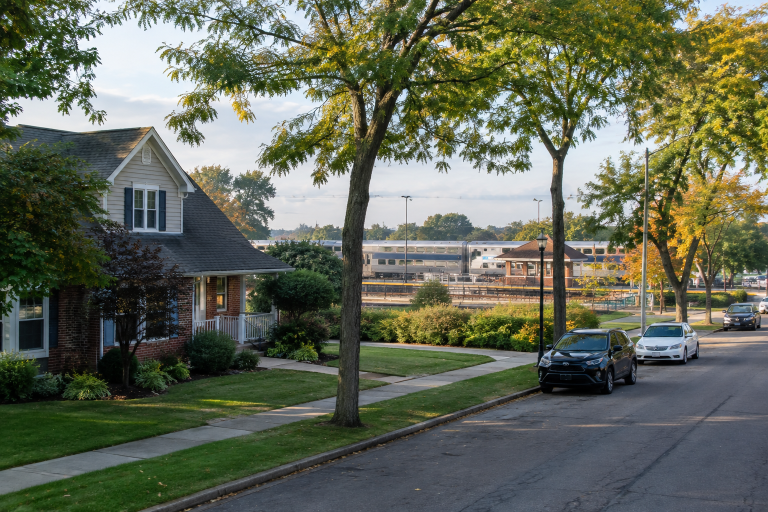
Chicago-area travel can change substantially by time of day, weather, road construction, and train schedules. Test your likely route during a weekday morning and evening if possible. Consider not only the trip itself, but also the time needed to reach a station, park, walk to the platform, transfer, and get from downtown to the final destination.
Questions for a Transit or Driving Test
- How long does the trip take door to door?
- Is station parking available and practical for your schedule?
- What happens if a train is delayed or a regular driver cannot make the trip?
- Are tolls, downtown parking, or last-mile transportation part of the routine?
- Does the route still feel workable during rain, snow, or heavy traffic?
Compare Home Styles and Maintenance Needs
Northwest suburban buyers may encounter condos, townhomes, ranch homes, two-story houses, older homes with character, and newer construction. Think beyond square footage. A well-designed, smaller home with useful storage, a practical garage, and an adaptable layout can be more comfortable than a larger home with awkward rooms or costly upkeep.
During showings and inspections, pay close attention to the roof, HVAC equipment, plumbing, electrical system, windows, drainage, foundation, and visible signs of water intrusion. Fresh paint and updated counters can improve first impressions, but major systems and site conditions have a greater effect on future maintenance planning.
Look Beyond School Ratings
School information may be important for many households, but it is only one part of a community comparison. Evaluate libraries, park districts, recreation programs, healthcare access, childcare options, dining, shopping, sidewalks, and reliable internet availability. Attendance boundaries and programs can change, so confirm current information directly with the applicable school district rather than relying on a real estate listing.
Also, visit the neighborhood after dark and during busy periods. Notice street lighting, traffic flow, train or road noise, parking pressure, pedestrian activity, and the general feel of the block. These details are personal, but they often determine whether a location feels comfortable over time.
Use Local Data Without Losing Local Context
Data can help organize a suburb search, especially when comparing housing supply, affordability, household patterns, and development trends. The Chicago Metropolitan Agency for Planning publishes local housing profiles for northeastern Illinois communities, which can provide useful context as you weigh Arlington Heights against nearby suburbs.
Still, data cannot replace firsthand observation. Check what is happening near the home itself, including traffic patterns, commercial activity, sidewalk conditions, nearby construction, and proposed development. The character of one block can differ meaningfully from another part of the same suburb.
Consider Future Flexibility and Resale Appeal
Think through likely three-, seven-, and ten-year scenarios. Could the home accommodate remote work, guests, caregiving, a growing household, or a future desire to reduce maintenance? Features such as usable storage, sensible bedroom placement, off-street parking, outdoor space, and transportation access may broaden a home’s appeal later, though resale outcomes can never be guaranteed.
Build a Simple Suburb Scorecard
Use the same one-to-five rating system for every community and property you visit:
- Monthly cost: Housing payment, taxes, insurance, maintenance, and transportation.
- Daily routine: Commute, errands, transit, parking, and travel time.
- Home fit: Layout, condition, storage, outdoor space, and accessibility.
- Community services: Parks, healthcare, shopping, libraries, and recreation.
- Future flexibility: Changing needs, repair outlook, and practical resale features.
- Personal comfort: Noise, walkability, street activity, and overall feel.
Common Mistakes to Avoid
- Choosing a suburb only because it appears in a popular ranking.
- Comparing list prices without comparing taxes and recurring costs.
- Testing a commute only on a quiet weekend.
- Focusing on square footage instead of layout and condition.
- Skipping evening neighborhood visits.
- Ignoring future household needs until after making an offer.
Choose the Community That Fits Real Life
The right Chicago suburb is not necessarily the most popular or the closest match to an online wish list. It is the community where the budget, commute, home condition, services, and future plans align with the life you actually expect to live. Compare those fundamentals before becoming attached to a listing, and the buying decision will be clearer long after closing day.