



A custom pickup should solve real problems, whether that means hauling equipment, towing a trailer, traveling off pavement, or creating a more comfortable daily driver. Before committing to a project, compare your plans with professionally assembled examples of a custom auto for sale to see how wheel size, suspension height, bed accessories, and exterior upgrades can work together. The most successful builds are planned around function first and appearance second. A truck can look aggressive with oversized tires and a lift kit. However, it still needs predictable steering, adequate braking, usable cargo capacity, good visibility, and parts that can be serviced without difficulty.
Why Build Planning Matters More
Modern pickups are more complex than older platforms. Many have cameras, parking sensors, radar-based features, electronic stability control, trailer-assistance technology, and computer-controlled powertrain systems. Changes to ride height, bumpers, tire diameter, lighting, or windshield components can affect how some of those systems operate. Safety deserves equal attention on light-duty and heavy-duty projects. The Insurance Institute for Highway Safety has started heavy-duty pickup safety evaluations examining key driver-protection equipment, including airbags, seat-belt technologies, and belt reminders. That is a useful reminder that a capable work truck should remain safe. Customization is also widespread, but popularity is not a substitute for planning. The latest light-truck market data show that pickups account for a major share of the specialty-parts market, with owners spending billions annually on accessories and modifications. Build deliberately instead of copying a setup that may not fit your truck or intended workload.
Step 1: Define the Truck’s Main Purpose
Choose one primary role, then identify one or two secondary uses. This decision guides nearly every later purchase.
- Daily driving: Prioritize ride comfort, road manners, parking practicality, visibility, and reasonable tire noise.
- Towing: Focus on factory ratings, tire capacity, hitch equipment, cooling, braking, mirrors, and payload.
- Work use: Consider bed protection, lockable storage, task lighting, easy-clean surfaces, and suspension support for regular cargo.
- Off-road travel: Plan for ground clearance, traction, recovery points, underbody protection, and enough tire clearance through full suspension travel.
- Show and street use: Balance styling with tire wear, legal lighting, safe fender coverage, and a ride height that remains practical.
Step 2: Choose the Right Starting Truck
Begin with a platform that already suits most of the job. Confirm the engine, drivetrain, cab, bed length, wheelbase, turning radius, factory payload rating, and towing rating. Review the service and accident history of a used truck and consider whether replacement parts will be easy to obtain later. A build that starts with the right truck usually requires fewer compromises and fewer expensive corrections.
Step 3: Build a Complete Budget
The truck and parts are only part of the final cost. Include wheels and tires, suspension components, brake-related work, alignment, balancing, professional labor, sensor or camera calibration, registration or inspection requirements, insurance updates, and routine replacement parts. Keep a reserve of roughly 10% to 20% for seized hardware, additional labor, alignment corrections, or overlooked supplies.
Step 4: Select Upgrades in the Right Order
- Start with tires. Select the intended tire size, tread type, terrain use, and load rating before choosing suspension height.
- Match the wheels. Confirm bolt pattern, offset, brake clearance, wheel load capacity, and fitment with the chosen tires.
- Plan suspension as a package. Lift height, shocks, control arms, steering components, brake-line clearance, and alignment capability should work together.
- Review braking and drivetrain needs. Larger, heavier tires can change acceleration, braking feel, and gearing behavior.
- Add protection and utility. Install recovery points, skid plates, bed systems, steps, and lighting after core chassis decisions are settled.
- Finish with appearance items. Cosmetic details are easier to choose once the truck is sitting, handling, and functioning as intended.
Suspension Lifts, Leveling Kits, and Larger Tires
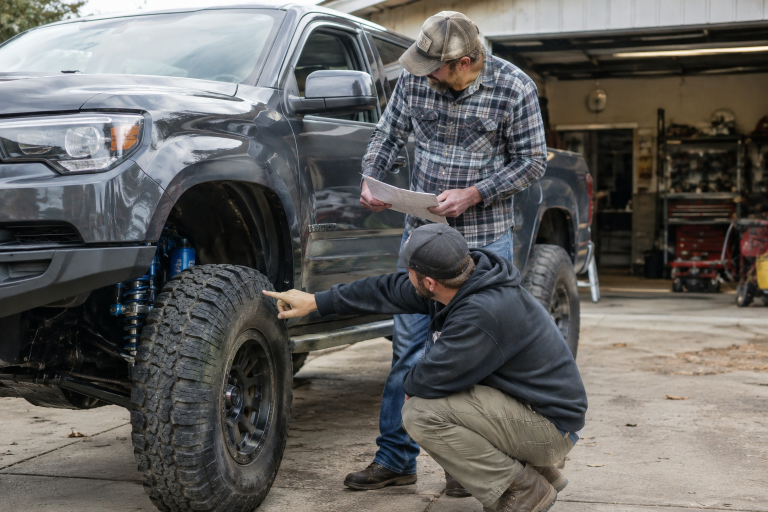
Even a modest change in ride height can alter suspension geometry and steering angles. Larger tires may rub during turns or suspension compression, place additional load on wheel bearings and steering components, and cause the speedometer to read inaccurately if the vehicle is not properly adjusted. A professional alignment and a careful check of hoses, wiring, brake lines, and tire clearance should follow any suspension modification.
Protect Driver-Assistance Features
Do not assume factory safety features will work the same after modifications. A replacement bumper may affect radar placement, a lift can change camera and sensor height, and accessories such as grille inserts, light bars, window tint, or cargo can obstruct cameras. Ask the installer whether calibration is required after suspension, bumper, windshield, wheel, tire, or alignment work. Address warning lights immediately rather than treating them as an expected side effect of customization.
Legal, Insurance, and Installer Checks
Review local requirements before ordering parts
- Confirm applicable lift-height, bumper-height, fender-coverage, lighting, exhaust, and emissions requirements.
- Ask your insurer whether modifications need to be disclosed and whether added equipment is covered.
- Keep product receipts, installation invoices, alignment records, and calibration documentation.
- Ask the installer whether each component fits your exact model year, drivetrain, cab, and bed configuration.
- Ask how the work affects warranty coverage, maintenance intervals, towing, payload, and road legality.
Post-Build Inspection and Testing
Before putting the truck into regular service, inspect wheel and suspension fasteners, verify tire pressure and wheel torque, and confirm that there is safe clearance around brake lines, wiring, and hoses. Test steering and braking at low speed in a safe area; check for rubbing during turns and suspension movement; and scan for warning lights or assistance-system faults. Recheck the build after the first 100 to 500 miles, particularly after suspension or wheel work.
Common Mistakes to Avoid
- Buying parts for appearance alone.
- Ignoring tire and wheel load ratings.
- Adding heavy bumpers, racks, tools, or accessories without considering payload.
- Mixing unrelated suspension components without confirming compatibility.
- Skipping alignment, calibration, or follow-up inspections.
- Forgetting practical limits such as parking garages, ramps, trailers, and tight trails.
- Spending the full budget before labor, maintenance, and unexpected repairs are covered.
Conclusion
A practical custom pickup build begins with a clear purpose and ends with careful testing and verification. Before purchasing parts or making modifications, identify how the truck will be used, whether for daily commuting, work-related hauling, off-road driving, towing, or recreational activities. Choose compatible components that support these requirements without placing unnecessary stress on the vehicle. Pay particular attention to the braking system, suspension, steering, tires, lighting, and other safety-related components, as changes in one area can affect overall performance. It is equally important to stay within the manufacturer’s weight ratings, follow local regulations, and consider how modifications may affect insurance coverage, warranties, and maintenance needs. After installation, inspect the affected systems and test each major change under appropriate conditions to confirm that everything works as intended. Keeping records of installed parts, adjustments, and professional inspections can also make future maintenance easier. When functionality, safety, reliability, and appearance are considered together from the beginning, the finished pickup becomes more than a customized vehicle. It becomes a dependable and practical truck designed to support the owner’s specific needs for years to come.