




Maintaining your air conditioning system doesn’t just reduce the chances of unexpected summer breakdowns. Consistent care ensures your system operates at peak performance, all while helping manage utility costs. When it comes to air conditioning, regular maintenance forms the backbone of a cool and comfortable home throughout the hottest months.
Effective AC upkeep not only provides relief from the heat. It also extends the system’s lifespan and safeguards indoor air quality, delivering year-round reliability. Homeowners who prioritize routine check-ups gain the confidence of knowing their equipment will work when they need it most, with fewer unexpected costs and disruptions. Routine maintenance also helps spot potential issues early, keeping repair bills lower and energy efficiency higher.
Many homeowners may not realize that keeping an AC system running smoothly is a holistic process. Checks on filters, coils, and electronics make a measurable difference in both comfort and future costs. Plus, conducting regular, minor upkeep now prevents the need for emergency calls in the middle of summer.
It’s just as important to care for your heating system to guarantee warmth during the winter months, completing year-round home comfort.
Importance of Regular AC Maintenance
Skipping regular maintenance checks on your air conditioning system may result in higher energy usage and a greater risk of breakdowns, especially when the weather is at its hottest. Much like changing oil in your vehicle, periodic inspections keep your AC components working with minimal stress and maximum efficiency.
A clean, well-serviced AC unit can cool your home faster and with less effort. According to the U.S. Department of Energy, up to 50% of the typical U.S. home’s energy bill is spent on heating and cooling. Regular AC maintenance, such as checking coolant levels, tightening electrical connections, and cleaning evaporator coils, can result in a 5% to 20% reduction in energy use, translating to meaningful savings on monthly bills. Frequent check-ups also ensure your thermostat readings remain accurate, avoiding energy waste.
Preventing Costly Repairs
Addressing small issues before they grow saves money and headaches down the road. Clogged filters, blocked condensate drains, or minor refrigerant leaks, if left unchecked, can eventually cause parts to fail or the entire system to shut down. Proactive attention to these routinely overlooked areas helps prevent untimely breakdowns, especially on the hottest days when you depend on cooling the most. Detecting warning signs early helps avoid the inconvenience of long, unexpected downtime and keeps repair costs in check.
Extending AC Lifespan
The expected lifespan of a home air conditioner typically ranges between 15 and 20 years. However, annual service visits, which include checking for worn belts, calibrating thermostats, and cleaning the system’s coils, can help some newer units last up to 25 years or more. When the system operates without extra wear or clogging, all moving parts encounter less friction and stress, resulting in longer-lasting performance. This approach mirrors the care given to other major home investments, like roofing or plumbing, to ensure dependable operation year after year.
Improving Indoor Air Quality
Unchanged filters and dirty ducts circulate dust, pollen, and even mold spores inside your living space. Regular service includes cleaning or replacing air filters and duct inspections, which significantly reduces allergens and contaminants in the air. These improvements provide not just comfort, but also health benefits, particularly for children, seniors, or anyone in the home with allergies or respiratory conditions.
Recommended Maintenance Schedule
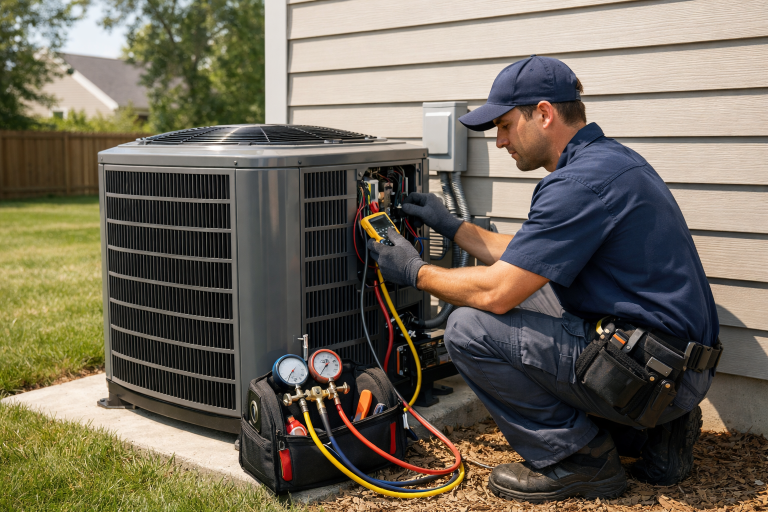
Most HVAC experts suggest scheduling a professional AC service at least once a year, ideally ahead of peak cooling season. Early spring appointments give technicians time to spot possible problems and ensure your system runs smoothly once hot weather arrives. Between professional visits, homeowners should regularly check and change filters, inspect outside units for debris, and monitor system performance as part of routine Exterior Maintenance.
DIY Maintenance Tips
- Change Air Filters Regularly: Switch out filters every one to three months to support strong airflow and cooling efficiency.
- Maintain the Outdoor Unit: Clear leaves, grass, and other debris from around the unit, and trim nearby foliage to prevent blockages.
- Test Thermostat Accuracy: Periodically check that your thermostat is displaying and controlling to the correct temperature. Calibrate or replace it if necessary.
When to Call a Professional
While basic upkeep is manageable at home, certain signs indicate you should call a professional HVAC technician. These include grinding noises, persistent odors, uneven cooling, rising humidity inside your house, or a notable uptick in energy bills. A trained eye can find hidden issues before they worsen, saving both time and money in the long run.
Investing time in regular AC maintenance is straightforward and cost-effective, yielding year-round comfort and peace of mind for homeowners. With an attentive approach, you’ll experience efficient cooling in summer, fresh and clean indoor air, and fewer unwelcome surprises on your utility bill.