




Closing on a home can feel like the finish line, but it is also where small mistakes can create expensive delays. A changed fee, an incomplete repair, or incorrect wire instructions can turn an exciting day into a stressful one. Knowing what a title company does and how the closing process fits together can help you ask better questions before you sign.
A smooth closing is not just about bringing identification and signing documents. Your financing, insurance, property condition, contract terms, closing funds, and transfer instructions all need to match. Use this buyer’s checklist to stay organized and address problems while there is still time to resolve them.
Why Closing Prep Matters in 2026
Closing is the point where the purchase agreement becomes an ownership transfer. Even when everyone has worked hard to reach this stage, last-minute issues can still arise. A repair may not be finished, an escrow charge may need explanation, or a document may contain the wrong spelling of a name.
Preparation gives you time to compare documents, confirm responsibilities, and raise concerns without making rushed decisions at the signing appointment. Closing practices vary by state, lender, and local custom, so ask your lender and closing professional what is required for your transaction.
What to Do One Week Before Closing
The week before closing is the time to confirm details, not make major changes. Follow this simple timeline:
- Confirm the closing date, time, location, and whether signing will be in person or remote.
- Ask who will provide the final documents, payment instructions, and key updates.
- Verify that homeowners’ insurance will be active by the date required by your lender.
- Send any remaining income, asset, identity, or employment documents promptly.
- Review the purchase agreement for repair commitments, seller credits, and possession deadlines.
- Schedule the final walkthrough as close to closing as possible.
- Avoid opening new credit accounts, moving large sums without explanation, or changing jobs unless you first speak with your lender.
Review Your Loan Documents
Your Loan Estimate provides an early picture of loan terms and costs. Your Closing Disclosure shows the final figures you should review before signing. Compare the loan amount, interest rate, monthly payment, loan type, lender credits, prepaid items, closing costs, and cash needed to close.
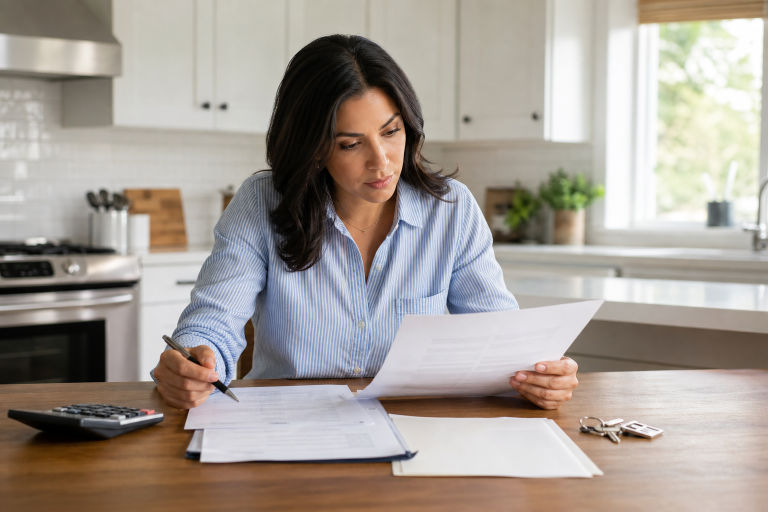
Check the basics carefully, including the spelling of every borrower’s name, property address, occupancy status, loan term, and interest rate. If a charge or term looks unfamiliar, ask for an explanation before closing. The Consumer Financial Protection Bureau’s Closing Disclosure explainer provides a useful page-by-page guide and notes that most borrowers must receive the form at least three business days before the scheduled closing.
Check the Property Details
Make sure the property you are receiving matches what you agreed to buy. Confirm the legal address and review whether repairs, seller credits, or other negotiated items are documented correctly. If the home is part of a homeowners’ association, revisit the rules, fees, shared driveway arrangements, easements, and restrictions that could affect everyday ownership.
Also, verify that the included items remain at the property. This may include appliances, light fixtures, garage remotes, mailbox keys, pool equipment, window coverings, and access codes. Ask your agent or closing professional about any issue that has changed since the offer was accepted.
Prepare Your Closing Funds
Cash to close is not always the same as your down payment. It can include the down payment, prepaid insurance or taxes, lender and settlement costs, and adjustments, minus earnest money, seller credits, or other approved credits. Confirm the exact amount and accepted payment method before closing day.
If you need to wire funds, ask your bank about daily limits, processing times, and in-person verification requirements. Do not wait until the final hour to initiate a transfer. Keep a modest reserve after closing as well, since moving costs, utility deposits, locksmith services, and unexpected repairs often arrive quickly.
Avoid Wire Fraud and Impersonation Scams
Wire fraud prevention deserves special attention. Criminals may impersonate a lender, real estate professional, seller, attorney, or closing agent and send realistic-looking instructions designed to redirect your money.
- Last-minute changes to payment instructions.
- Pressure to act immediately without calling anyone.
- Requests to send money to a new or unrelated account.
- Odd grammar, unfamiliar phone numbers, or slightly altered email addresses.
- Instructions that conflict with documents you received earlier.
Never rely only on the contact information in an unexpected message. Instead, call a known number from an earlier document or the organization’s official website to verify the instructions. The FBI’s property impersonation alert also highlights warning signs such as rushed sales, inconsistent property information, unusual documents, and payment requests involving unrelated accounts.
Complete the Final Walkthrough
A final walkthrough is not a replacement for a professional inspection. It is your chance to confirm the home’s condition shortly before closing and verify that the agreed-upon repairs were completed. Bring your inspection report, repair addendum, phone charger, and a camera for documentation.
- Test lights, outlets, faucets, toilets, appliances, heating, and cooling.
- Look for new leaks, damage, broken windows, or missing fixtures.
- Check the garage, attic, basement, yard, storage spaces, and exterior areas.
- Confirm that the seller’s belongings, trash, and unwanted furniture have been removed as agreed.
- Photograph problems and report them before signing.
What to Bring on Closing Day
Bring a government-issued photo ID, proof of homeowners’ insurance if requested, confirmation of your approved payment or wire transfer, and copies of the purchase agreement and recent closing documents. One of the reasons homeowners choose cash buyers is the potential for a simpler, more direct transaction, with fewer financing-related steps and less uncertainty around mortgage approval. Bring questions, too. It is better to pause for clarification than to sign something you do not understand.
Some closings use remote notarization or electronic signatures. Confirm in advance how identification, notarization, original documents, recording, and key delivery will be handled.
What to Do After Signing
- Save digital and paper copies of signed closing documents.
- Confirm when possession, keys, remotes, and access codes transfer.
- Verify that utilities are active in your name.
- Change exterior locks and update security or garage codes.
- Store mortgage, insurance, warranty, and property records securely.
- Watch for notices about property taxes, association dues, assessments, and recording.
Common Home Closing Questions
Can a buyer delay closing?
It depends on the purchase agreement, lender requirements, and reason for the delay. Raise the issue as soon as possible instead of waiting for the signing appointment.
What if the Closing Disclosure has an error?
Contact your lender and closing professional immediately. Ask what changed, why it changed, and whether a corrected document is needed.
Should buyers attend the final walkthrough?
Yes, when possible. Being there in person makes it easier to spot new damage, missing items, or incomplete repairs.
What if a problem appears at closing?
Ask for clarification, request a correction, or pause before signing. The right response depends on the contract and the seriousness of the issue.
Closing With Confidence
A smooth home closing is usually built before closing day. Review the documents, confirm your funds, inspect the property, verify every payment instruction, and speak up when something does not match your expectations. Those few careful steps can help protect your purchase and make the handoff to homeownership feel far more secure.