


Businesses planning a new sign package often need more than a vendor that prints graphics. They need coordinated help with design, site conditions, permitting, fabrication, accessibility considerations, and installation. Hightech Signs provides a practical starting point for a sign company Austin by bringing these stages together into a single full-service process for Austin and Central Texas projects.
Whether the need is a monument sign, a lobby logo, a room identification system, a vehicle graphics package, or a community wayfinding plan, a coordinated approach can reduce unnecessary handoffs. It also gives property owners, facility managers, developers, and marketing teams a clearer path from an initial idea to installed signage that fits the location and brand.
What Makes Hightech Signs a Practical Solution for a Signage Request?
Hightech Signs has served Austin and the surrounding Central Texas counties since 1990. The company identifies itself as woman-owned and Texas HUB-certified, with services that span graphic design, permitting support, fabrication, quality review, and on-site installation. That range can be useful when a project involves several sign types or requires coordination among a business, landlord, property manager, contractor, or municipal permitting office.
Using separate vendors for artwork, production, and installation can create uncertainty about who owns a design question, scheduling issue, or installation detail. A single signage partner can help keep brand elements, production specifications, and site requirements aligned throughout the project.
How Does the Signage Process Move From Request to Installation?
A well-prepared signage project usually follows a sequence that accounts for both appearance and real-world site conditions.
- Project discovery: The process begins with the location, business goals, intended audience, sign types, and physical installation environment.
- Design support: Logos, color palettes, copy, hierarchy, and layouts are adapted into sign-ready artwork that suits the selected format.
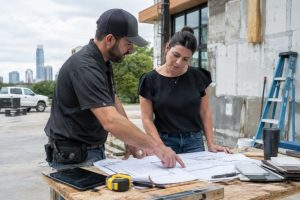
- Permitting coordination: Where required, the project can be evaluated for city, property management, or other approvals before fabrication proceeds.
- Fabrication: Materials, finishes, mounting methods, and production techniques are selected based on the sign’s intended use and location.
- Quality review: Artwork and finished components can be reviewed before the installation stage.
- Installation: Technical installers place and secure the completed signs at the planned locations.
This workflow matters because exterior conditions, wall construction, visibility, electrical needs, and installer access can affect both the sign design and the final schedule.
Which Signage Needs Can Hightech Signs Address?
Hightech Signs offers signage solutions for a variety of business, property, and community applications, including the following:
- Monument signs: Durable property identification for office parks, schools, healthcare facilities, neighborhoods, and commercial developments.
- Lobby signs: Branded reception-area signage that establishes identity at the point of arrival.
- Wayfinding signage: Directional signs, directories, parking guidance, and destination markers for campuses and larger facilities.
- ADA signage: Interior identification and navigation signs that can support applicable accessibility requirements.
- Vehicle graphics: Branded graphics for service vehicles, contractors, delivery fleets, and mobile businesses.
- Dimensional lettering: Raised or three-dimensional letters for exterior walls, storefronts, interior displays, and reception areas.
- Wall wraps and murals: Large-format graphics for offices, retail environments, schools, and public-facing spaces.
- Development signage: Coordinated sign systems for residential communities, mixed-use properties, and multi-tenant sites.
Why Should ADA Considerations Be Included Early?
Accessibility should be part of planning rather than an afterthought once signs have been produced. Depending on the facility and purpose of the sign, requirements may involve tactile characters, Braille, color contrast, non-glare finishes, mounting height, and placement near doors or permanent rooms. The 2010 ADA Standards for Accessible Design distinguish between different sign purposes, so not every exterior brand sign has the same requirements as a room-identification sign.
Early review helps a business identify which locations may need accessible signage, such as restrooms, permanent rooms, accessible entrances, or directional information. Project-specific conditions should be reviewed carefully, especially when a facility is being constructed, altered, or brought into compliance with applicable requirements.
How Can Better Wayfinding Improve the Visitor Experience?
Wayfinding is more than placing arrows on a wall. A useful system helps visitors answer three simple questions: Where am I? Where do I need to go? Which route should I follow? Sign placement at decision points is often as important as the text or graphics on the sign itself.
Effective wayfinding typically uses consistent destination names, legible typefaces, visual contrast, logical pedestrian and vehicle routes, and coordination among exterior signs, parking areas, directories, and interior destinations. For public roads or community systems, federal traffic-control guidance provides an additional framework for signs used in the roadway environment.
How Does One Sign System Support Brand Consistency?
A business can carry a unified identity across many physical formats without making every sign look identical. Monument signage can establish the property identity, lobby lettering can reinforce it on arrival, vehicle graphics can extend it into the community, and wall murals can support culture or storytelling inside the space.
Wayfinding can also use brand colors and visual cues while remaining clear and practical. Design support is particularly valuable when a logo must be adapted for dimensional letters, a fleet graphic, a large wall application, or a sign viewed from a distance.
What Should a Business Include in a Hightech Signs Project Request?
More complete information at the start can help define the scope and identify questions before production begins. A useful request should include:
- Business name, project address, and primary contact information.
- The sign types and approximate quantities needed.
- Site photos, available measurements, and installation-surface details.
- Logo files, brand standards, colors, and preferred finishes.
- Desired completion date and any known permitting deadlines.
- Property-management rules, landlord requirements, or existing sign criteria.
- Accessibility needs and known compliance considerations.
- A budget range, when available, to help guide material and design options.
Who Can Benefit From Hightech Signs?
Hightech Signs can support signage requests from corporate offices, healthcare facilities, schools, retail businesses, restaurants, professional service firms, construction companies, real estate teams, residential developments, mixed-use properties, municipalities, nonprofits, and companies with branded vehicle fleets. Its service area includes Austin and nearby Central Texas communities, including Round Rock, Pflugerville, Cedar Park, Georgetown, San Marcos, New Braunfels, and San Antonio.
Frequently Asked Questions
Can Hightech Signs help with more than one type of sign?
Yes. Its service offerings include exterior identification, interior signs, ADA signage, wayfinding, dimensional lettering, vehicle graphics, wall graphics, and development signage.
Can Hightech Signs assist with sign design?
Yes. Graphic design support can help adapt logos, organize information, prepare layouts, and create production-ready artwork for custom sign applications.
Why work with one company for design, fabrication, and installation?
A coordinated provider can simplify communication and help keep design decisions, materials, production, scheduling, and installation details connected throughout the project.
In Summary
Hightech Signs offers Austin-area organizations a clear option for signage that combines branding, practical navigation, accessibility planning, fabrication, and professional installation. With a full-service approach and experience serving Central Texas since 1990, the company can help businesses turn a detailed signage request into a coordinated finished environment.