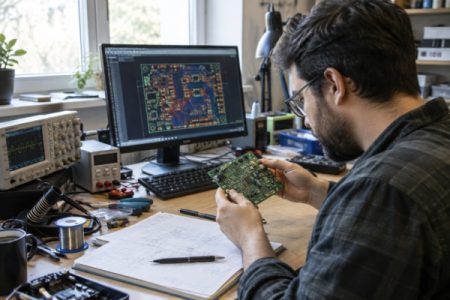




Hardware development cycles and additive manufacturing teams face an ongoing bottleneck during pre-production verification: transitioning from conceptual sketches and reference photographs into watertight, dimensionally accurate physical geometry. Traditional Computer-Aided Design (CAD) workflows demand hours of manual extrusion, fillet construction, and boundary drafting before a single prototype can be sent to a desktop slicer. Integrating an enterprise-ready image to 3D generator into early prototyping loops enables design engineers and hardware technicians to convert product sketches into production-ready volumetric geometry within minutes.
At the center of this rapid fabrication shift, Neural4D combines deep spatial attention models with parametric manufacturing intelligence. Rather than outputting fragmented polygon clusters that fail non-manifold mesh verification, the platform focuses on generating intact, production-grade geometric structures designed specifically for additive manufacturing and industrial prototyping. In this analysis, we evaluate how N4D streamlines physical product development, examining foundational volumetric synthesis, conversational CAD controls via the Coala agent, automated model segmentation for large build envelopes, and multi-material slicing integration.
Algorithmic Foundation: Direct3D-S2 and Spatial Sparse Attention
Mechanical prototyping tolerates zero geometric ambiguity. When generating functional parts such as equipment housings, mounting brackets, or internal gear assemblies, standard generative systems frequently introduce floating artifacts, non-manifold boundaries, or inverted normals. These flaws stem from legacy volumetric grid implementations that scale compute exponentially as coordinate grid density increases, forcing systems to blur fine geometric details.
N4D bypasses these resolution barriers through its proprietary Direct3D-S2 algorithm, a framework validated in NeurIPS 2025 research. By replacing uniform volumetric grids with Spatial Sparse Attention (SSA), the architecture directs mathematical operations exclusively toward occupied surface voxels. This computational focus enables native spatial generation up to 2048³ resolution, preserving tight dimensional tolerances, crisp chamfers, and uniform shell thicknesses across physical boundaries.
Hardware teams must account for a distinct two-stage operational timeline during inference:
· Base Mesh Synthesis: Generating an untextured white model requires approximately 90 seconds. During this pass, the network calculates volumetric boundaries, surface normal vectors, and watertight boundary logic.
· PBR Material Synthesis: Generating physical-based rendering (PBR) texture maps represents a separate computational pass. Computing diffuse albedo, roughness, metallic, and normal maps requires additional processing time. As a result, exporting a complete, production-grade textured GLB asset averages over two minutes in total elapsed time.
For mechanical verification, this architectural separation is practical. Hardware engineers frequently require untextured STL or 3MF meshes purely for slicing and dimensional test-fitting. Completing raw base geometry in 90 seconds accelerates mechanical iteration without expending computational overhead on texture channels that physical prototyping beds do not require.
Conversational CAD Precision: The Coala Agent
Standard generative 3D tools produce freeform organic sculpts that lack dimensional repeatability, limiting their utility for functional hardware components. N4D addresses this operational gap by deploying Coala, an autonomous conversational CAD agent built specifically for dimensioned mechanical components.
Coala accepts multidimensional inputs, including descriptive text prompts, photographic references, and technical engineering drawings. Key operational characteristics include:
· Dimensional Precision: Coala enforces strict millimeter-level dimensional constraints. Engineers can alter wall thicknesses, adjust bore diameters, or refine bolt hole spacing through conversational chat instructions.
· Deep Thinking Architecture: When constructing multi-component assemblies such as interlocking hinges, sliding latches, or motor brackets, Coala initiates multi-agent planning loops to confirm structural relationships prior to final mesh generation.
· Direct Manufacturing Export: Geometry synthesized by Coala exports directly as .STL files, compatible with slicing suites including Bambu Studio, PrusaSlicer, and Ultimaker Cura.
The tool maintains a defined functional focus on dimensioned mechanical brackets, equipment housings, cable organizers, and structural jigs. Organic character sculpts and artistic figurines remain within standard 3D Studio modules, ensuring Coala remains optimized for structural integrity.
Additive Manufacturing Pre-Production Verification and Slicing Tolerance Matrix
Transitioning generative geometry to fused deposition modeling (FDM) or stereolithography (SLA) printing requires assessing slicing parameters, structural overhangs, and build envelope constraints. The following matrix outlines pre-production engineering checkpoints across distinct prototype categories generated within N4D:
| Component Category | Target Polycount Profile | Wall Thickness Tolerance | Slicing Orientation Strategy | Automated Segmentation Rules | Primary Export Format |
| Structural Mounting Brackets | 45,000 to 60,000 Triangles | Minimum 2.4 mm (3 Perimeters) | Align primary stress plane parallel to print bed | Single-piece build or rigid joint merge | STL (Watertight Solid) |
| Electronic Enclosure Shells | 35,000 to 50,000 Quads | 1.8 mm uniform wall profile | Flat face downward, zero internal support | Smart split at parting line with lip joints | 3MF (Assembly Archive) |
| Multi-Material Functional Jigs | 40,000 to 70,000 Triangles | 2.0 mm to 3.5 mm variable zones | Flat base orientation, 45 degree overhang limit | Algorithmic color separation across 4 zones | 3MF (Color Mapped) |
| Mechanical Linkages and Hinges | 25,000 to 45,000 Quads | 0.3 mm clearance on mating pins | Vertical pin alignment to prevent layer shearing | Component isolation with individual part export | STL / OBJ |
| Rapid Form Verification Mockups | 15,000 to 30,000 Triangles | 1.2 mm minimal skin shell | Optimize for minimal support volume | Single shell envelope verification | STL |
Adhering to these parameters prevents common print defects including delamination, dimensional warping, and nozzle collision during high-speed desktop fabrication.
Managing Build Volumes: Model Segmentation and Assembly Splitting
A recurring limitation in hardware prototyping is print bed volume. When an enclosure, bracket, or tooling fixture exceeds standard 256 mm cubic print volumes, engineers historically had to cut models manually using third-party mesh software, introducing jagged edges and weak alignment joints.
N4D solves this issue through its integrated Model Segmentation (Part Split Printing) tool. Operating at 40 Credits per job, the module analyzes unified 3D meshes and calculates logical structural partitions:
· Smart Structural Splitting: The algorithm divides oversized models into interlocking printable components that fit standard desktop build volumes.
· Assembly Viewer and Part Inspection: In the dedicated inspection viewer, engineers can isolate specific segments, inspect mating geometry, and verify internal clearance gaps before manufacturing.
· Selective Part Merging: Users can select compatible sub-components and execute merges, sequentially tagged as merged parts, to combine non-critical sections into consolidated print runs. Merging operations include free previews, with final application deducting 20 Credits.
· Consolidated Package Export: Segmented assets download as unified 3MF archives containing every white model component, ready for immediate slicing.
For multi-material assemblies requiring visual identification, the Multicolor module operates at 30 Credits to execute algorithmic color separation. The system identifies distinct topological regions, allowing technicians to map physical filament presets, such as PLA Basic, PLA Matte, PETG, ABS, and TPU, directly to regional zones before exporting multi-material 3MF files.
Four-Stage Pre-Production Pipeline: From Reference Draft to Slicer-Ready 3MF
Engineering teams can structure rapid hardware verification into four repeatable phases:
1. Multimodal Ingestion: Engineers upload concept sketches, dimensioned diagrams, or physical component photos into Image to 3D. The platform accepts drag-and-drop, clipboard pasting, and file uploads up to 20MB in PNG, JPG, JPEG, and WebP formats. For complex geometries, Multi-View to 3D incorporates six orthogonal camera views to lock down dimensional accuracy.
2. Direct3D-S2 Volumetric Synthesis: Jobs run through SSA inference, resolving watertight geometry without internal voids or non-manifold edges. Users select between triangle meshes (defaulting to 50,000 polygons) for high-density structural slicing, or quad-dominant meshes (1,000 to 100,000 polygons, consuming 35 Credits when combined with full PBR textures) for animation and flexible deformation.
3. Conversational Refinement and Part Segmentation: If clearances or wall thicknesses require adjustment, engineers utilize Neural4D-2o for prompt-based mesh adjustments at 30 Credits per turn. Oversized models pass directly into the Model Segmentation module to produce interlocking sub-assemblies.
4. Slicing Verification and Toolpath Generation: Geometry exports into standard formats including OBJ, FBX, GLB, USDZ, STL, and BLEND. Technicians import the files into their preferred slicing environment, generate toolpaths, and begin fabrication.
When testing print profiles and verifying spatial tolerances across different printer configurations, engineers frequently cross-reference open repositories such as the DIY3D model sharing platform, where creators inspect community-tested files and hardware-validated print profiles.
Enterprise Security, Data Privacy, and Production Scalability
Deploying generative workflows within commercial hardware engineering demands rigorous data privacy and licensing clarity:
· Commercial Ownership: Paid subscribers retain full commercial rights over all generated meshes, CAD components, and exported archives, ensuring proprietary designs remain protected.
· Private Workspace Protection: To safeguard pre-production hardware, patent-pending enclosures, and proprietary prototypes, subscribers can activate the Private visibility setting, preventing confidential assets from appearing in public community feeds.
· Enterprise Infrastructure: N4D demonstrates enterprise credibility through a formal strategic partnership with ByteDance valued at over $1 million annually. This collaboration verifies the stability of N4D high-concurrency architecture, supporting enterprise design teams with reliable processing uptime.
Engineering Synthesis
Accelerating pre-production hardware development requires bridging conceptual ideation with physical manufacturing reality. Generative systems that produce non-manifold geometry or approximate meshes introduce costly friction into prototyping schedules.
By pairing the Direct3D-S2 algorithmic foundation with the Coala conversational CAD agent, automated model segmentation, and multi-color material mapping, Neural4D delivers an integrated toolchain for modern hardware prototyping. Hardware teams can move from photographic drafts to slicer-ready, watertight physical components with speed, precision, and predictable engineering control.