

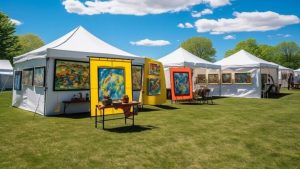

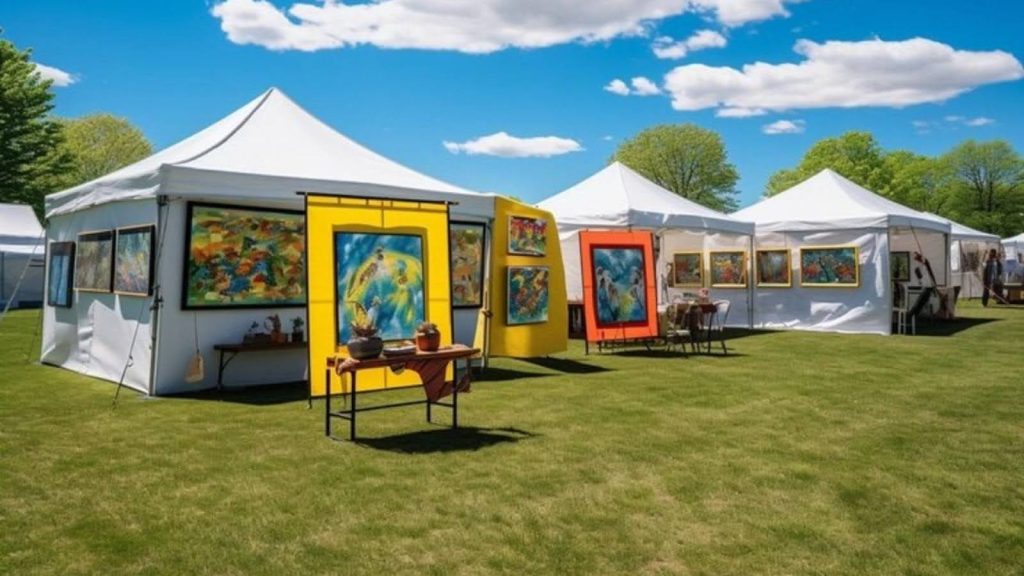
The current competitive landscape of trade shows and outdoor events no longer views brand presence as limited to conventional signage and on-site displays. Each component of a physical arrangement can serve as a strategic communication tool that supports identity and motivates recognition. The custom canopies that have been developed professionally are no longer seen as mere functional shelters but are now seen as mobile advertising billboards, which are dynamic and can be turned into consistent brand message delivery, which can be applied in varied settings.
Be it at a business fair, a company activation, a product release, or a community event, a properly branded tent will be seen as an instant visual display that draws the eye from a distance and is remembered even after the interaction is complete. Combining design accuracy and portability, custom tents provide companies with a flexible platform to advertise services, display products, and share value in real-time environments where they can experience instant, effective audience engagement.
Five Ways to Turn Custom Tents into High-Impact Mobile Advertising Tools
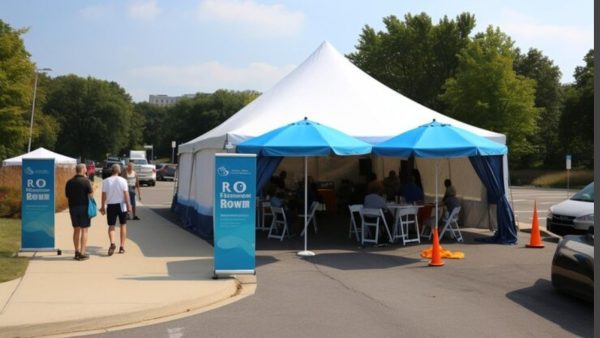
Source: Freepik
1. Functional Engagement Through Custom Food Booth Integration
Custom food booth setups are carefully planned to allow the branded tents to have more than a mere display capability. The addition of product sampling areas, refreshment areas, or interactive service areas would help ensure that customers stay longer in the branded space. This long interaction increases the likelihood of meaningful dialogue and brand recognition.
The activation involving food is inherently crowd-pulling and opens the door to marketing. Service counters and the preparation area are incorporated into the tent structure when included, which adds a sense of professionalism and order. Handed-over table covers, matched staff uniforms, and matched signage also add to uniformity. The change will enable the tent to serve not just as a visual identifier but also as an experiential center where the brand experience is memorable and shareable.
2. Maximizing Surface Area for Continuous Brand Messaging
All the panel, valence, and canopy walls constitute rich advertising space. The graphics printed on the roof paneling and sidewalls are high-resolution, so branding can be seen from various angles. Cohesion is provided by constant color schemes, typography, and logo placement, which build on recognition.
Large-format printing technology enables companies to include images, promotional text, and contact details without reducing readability. This makes sure that the passersby can easily notice services or products even within the crowded event settings. When organizations use the entire structural footprint of the tent, they can deploy a passive shelter and turn it into an active promotional space to convey messages throughout the event.
3. Mobility for Expanded Audience Reach
Custom tents are extremely flexible, unlike permanent installations or fixed signage. Portability enables businesses to carry the brand messages to various locations without having to redesign or reprint advertising materials. Trade fairs, outdoor networking, pop-up marketing, and other activities, all of one brand, can be consistent and reliable in different settings.
Frames are lightweight and made of strong fabrics, allowing a user to deploy and disassemble quickly. This mobility is a guarantee that promotional investments yield returns on a wide range of activations. As the tent moves from one place to another, the brand story travels into new markets and new segments of fans, and the coverage becomes even larger without the extra expense of developing infrastructure.
4. Lighting The Building, Nighttime.
The environment of events may occasionally run past daylight, causing visibility to be a major issue in sustaining the attention of the audience. Branding elements are well-lit by integrated LED lighting systems placed along canopy frames or interior support beams after the sun goes down. Adequate lighting brings out logos and promotions and makes the place welcoming.
Lighting: Lighting can be used to highlight product displays or interactives within the tent to prompt people to go further. Outside lights are used to sharpen the outlines of structures, and the tent could be recognized even at some distance. This long-term presence will make the marketing activities relevant irrespective of time and weather conditions.
5. Data-Driven Layouts for better visitor flow.
The interior layout of a personal tent, considering the visitors’ movement, is conveniently designed to not disrupt the accessibility and engagement rate. Open-access points encourage exploration, whereas specific areas guide attendees through product demonstrations, advice, or information displays. Defined routes reduce congestion and provide a free navigation experience.
The use of digital touchpoints, such as tablets or QR-code screens, will motivate attendees to consume brand content directly. Interactive screens can be placed where entryways or service counters are, so as to attract attention and share information. This information can be used to implement post-event follow-up mechanisms so that the tent is not only a promotional stand but also a lead-generating mechanism.
End Point
Custom-made tents provide much more than shelter against environmental factors; they can serve as mobile advertising billboards, delivering consistent, high-impact brand messages across a wide variety of event environments. Balancing utility engagement zones, optimizing graphics positioning, being portable, using intrinsic lighting, and adopting data-driven designs can turn customary booth layouts into participatory promotion spaces. This is a strategic tactic that improves visibility, brand recall, and meaningful audience engagement, ensuring every event attendee contributes to long-term awareness and quantifiable marketing outcomes.