
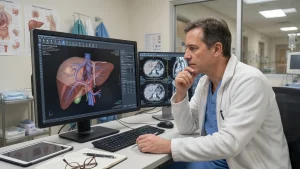



In Greek myth, Prometheus was chained to a rock and an eagle ate his liver every day. Every night, the liver grew back. It is a grim story, but the ancient storytellers were on to something. Of all the organs in the body, the liver is the one with a remarkable ability to regrow after part of it is removed.
That single fact changes how surgeons think about liver cancer surgery in Singapore patients may be offered. Most people assume the key question is how big the tumour is. Often, the more important question is how much healthy liver will be left behind.
The Counterintuitive Arithmetic
Picture two patients. One has a large tumour in a healthy liver. The other has a smaller tumour in a liver scarred by years of hepatitis or fatty liver disease.
Intuition says the second patient is the easier case. Surgeons may see it the other way round. The first patient can lose a large portion of liver and still have plenty of good tissue left to keep working and regrow. The second patient may not have that reserve. Removing even a modest piece could leave too little working liver behind.
Surgeons sometimes call this the future liver remnant. It is the part that stays. Its size and health often decide whether surgery is safe.
Why Liver Health Comes First
The liver filters blood, makes proteins that help clotting and processes medicines. After surgery, the remaining liver has to do all that work while it regrows. If it is already struggling, the risk of liver failure rises.
That is why tests before surgery look beyond the tumour. Expect blood tests of liver function, scans that measure liver volume and sometimes tests of how well the liver clears a substance from the blood.
Ways to Make Surgery Possible
When the remaining liver looks too small, there are sometimes ways to help it grow first. One approach blocks the blood supply to the part that will be removed, which encourages the other side to enlarge over several weeks. Another approach treats the tumour with chemotherapy or other therapies to shrink it before an operation.
These steps take time, which can feel frustrating. But they can turn an unsafe operation into a safer one. Waiting, in this case, may be part of the treatment rather than a delay.
Surgery Is One Option Among Several
Not every liver cancer is best treated with surgery. Depending on the tumour type, size, number and the health of the liver, options can include:
- Removing part of the liver
- Liver transplant for carefully selected patients
- Ablation, which destroys small tumours with heat
- Treatments delivered through the blood vessels that feed the tumour
- Medicines that target cancer throughout the body
A multidisciplinary team, where surgeons, cancer doctors and radiologists review a case together, helps make sure the right option is chosen rather than the most familiar one.
Questions Worth Asking
How much liver will remain after surgery? Is my liver healthy enough to regrow? Are there steps we can take first to make surgery safer? Has my case been reviewed by a team? What are the alternatives if surgery is not right for me?
These questions show that you understand the real decision being made. Most surgeons welcome patients who ask them.
The Bigger Lesson
The story of liver surgery is a story about what is left, not what is taken. It is an odd way to think about cancer, because the focus naturally falls on the tumour. But the healthy tissue is the hero of the operation. It carries the patient through recovery and grows back into a working whole.
If you or someone you love is facing this decision, shift your attention from the size of the problem to the strength of what remains. It may be the question that matters most.