
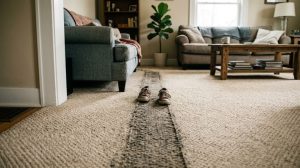



A living room carpet can look clean and soft almost everywhere, then show a tired-looking strip running straight through the middle. It’s a familiar sight in homes where people walk the same route between the sofa, the kitchen, the hallway, and the back door, often dozens of times before lunch. Most of the carpet barely gets touched. That one narrow line, though, might take hundreds of steps a day.
Knowing why this happens helps homeowners protect their carpet, rethink where the furniture sits, and spot the point where ordinary care is no longer enough. The difference between flattened fibres and built-up dirt matters a great deal, because each one calls for a different fix.
How Everyday Walking Creates a Worn Carpet Path
Carpet fibres are made to handle regular use, but constant pressure in the same spot slowly changes how they look. When people follow the same route all day long, their footsteps pile friction, pressure, and dirt into one small area.
Picture an ordinary evening. Someone gets up from the sofa during an ad break, heads to the kitchen for a snack, and comes back. Twenty minutes later, they do it again. Other family members follow almost exactly the same line coming in from the hallway or heading out to the back door to let the dog out. Over months, all those overlapping trips carve out a clear traffic lane.
The carpet on either side stays relatively plush because hardly anyone steps on it. The busy strip, meanwhile, can turn darker, shinier, or thinner. That contrast makes the path stand out, even though the whole carpet went down on the same day.
Why Furniture Placement Influences Carpet Wear
Furniture quietly decides where people walk. A sofa against one wall, a TV on the opposite wall, and a coffee table in between often leave just one sensible way to cross the room.
When that route points straight at a doorway, almost everyone takes the same line, give or take a few centimetres. The wear ends up far more concentrated than it would be in a room with two or three equally easy paths.
Protecting the carpet doesn’t mean rearranging the living room every month. It’s more about noticing whether the current layout funnels everyone through one narrow gap. Nudging the coffee table a little to one side, turning an armchair slightly, or opening up a more direct path to the hallway can spread the footsteps out more evenly.
Moving heavy furniture brings its own risks. Dragging a sofa across the carpet can do real damage, so lifting it where possible, with an extra pair of hands, and using suitable furniture glides helps reduce friction and protect the fibres.
The Role of Shoes, Entryways, and Outdoor Dirt
Shoes can speed up the wear on a busy carpet path considerably. Every pair carries in fine soil, grit, sand, and tiny bits of debris from outside, and with each step those particles settle down between the carpet fibres.
Under constant pressure, that grit acts a bit like sandpaper, rubbing against the fibres and wearing them down over time. Dirt can also make the traffic lane look darker than the rest of the carpet, which sometimes makes the damage look worse than it really is.
The back door deserves special attention, particularly when it opens onto a garden, a driveway, a patio, or a muddy path. Anyone coming in that way after mowing the lawn or putting out the bins is likely to bring in far more dirt than someone walking in from the bedroom.
A sturdy doormat outside and an absorbent mat just inside the door make a real difference. A handy spot to kick off shoes, perhaps a small rack or basket by the entrance, cuts down even further on the dirt that reaches the living room. The mats themselves need regular cleaning, though. A mat caked in mud stops doing its job surprisingly quickly.
Flattened Fibers or Removable Soil: How to Tell the Difference
A dark, squashed-looking path doesn’t always mean the carpet is ruined. Two quite different problems can look much the same at first glance: built-up soil and flattened fibres.
Accumulated soil often leaves carpet looking grey, brown, or dull. Depending on the material and what has been tracked in, the area may feel slightly gritty underfoot or look clearly darker than the carpet nearby. Proper vacuuming and professional cleaning can often improve the look.
Flattened fibers, on the other hand, have lost some of their natural upright shape because of repeated pressure. They catch the light differently, so the path can look shiny or patchy even when it’s fairly clean. Sometimes the fibres bounce back a little once the pressure eases and the carpet is gently groomed.
A simple way to tell the difference is to vacuum the worn strip slowly in several directions, then compare it with a quiet corner of the room that hardly anyone walks on. If the colour improves but the surface still looks pressed down, flattened fibres are likely a big part of the problem.
Aggressive scrubbing and untested cleaning products tend to do more harm than good. They can damage fibres, fade dyes, or leave a sticky residue that attracts even more dirt. The carpet’s construction, pile type, and the manufacturer’s care instructions are the best guide for any deeper cleaning.
How to Reduce Wear Along a Frequently Used Route
Preventing heavy wear starts with understanding how people actually move around the house. A few small changes can spread the pressure out and keep more dirt off the carpet.
Watching the room on an ordinary day is a good first step. Do people always squeeze between the same two pieces of furniture? Is everyone using one doorway simply because another route is blocked by a bookcase or a pile of shoes?
Rotating movable rugs, or laying a suitable runner along the busiest route, can also help. A well-chosen runner protects the carpet underneath, as long as it suits the carpet type and stays put rather than sliding about or curling at the corners and becoming a trip hazard.
Regular vacuuming makes a real difference too. Busy paths usually need more attention than corners or the space under the sofa. A vacuum suited to the carpet’s pile height, set up according to the manufacturer’s guidance on brush settings, gets the best results without roughing up the fibres.
Checking the path every few months is worthwhile as well. Early signs of wear are far easier to deal with than damage that has been building quietly for years.
When Carpet Cleaning May Help
After the furniture has been moved, it’s worth taking a fresh look at the old walking route to see whether it starts to recover. If it still looks dark, feels sticky, or stands out in colour, dirt may still be trapped deep in the fibres.
In that situation, many homeowners turn to professional carpet cleaning services to assess the fibres and choose a suitable cleaning method. For residents comparing local options, Bothell WA carpet cleaning services for homes may be a relevant search phrase when researching residential carpet care.
Professional cleaning can lift out dirt that everyday vacuuming leaves behind. It can’t, however, bring back fibres that are permanently damaged or badly worn. A good technician takes the carpet material, any existing stains, past cleaning treatments, and how severe the traffic pattern is into account before suggesting a method.
Drying matters just as much as cleaning. Carpet that stays damp for too long, especially in a room with poor airflow or over padding that soaks up moisture, can develop new problems, including musty smells that linger long after the cleaners have gone.
Conclusion
A narrow worn path across a living room carpet usually comes down to people following the same routes every day. Furniture placement, endless trips to the kitchen, hallway traffic, and the back door can all pile pressure and dirt into one strip while the rest of the carpet barely gets touched.
Working out whether the problem is trapped dirt, flattened fibres, or genuine wear makes it much easier to choose the right response. A sensible furniture layout, good entrance mats, regular vacuuming, and a timely check by a professional all help keep the carpet looking its best.
No carpet stays brand new forever. Spotting high-traffic patterns early, though, can prevent a lot of avoidable damage and help homeowners make better decisions about cleaning, upkeep, and eventually replacement.